Individual Asset Protection During a Missouri Medicaid Crisis

Missouri Medicaid rules determine how assets are reviewed when a nursing home application is filed. If you are single and facing nursing home care, you may have been told there are no options left to protect anything you have worked for. Many individuals are led to believe that Medicaid planning only applies to married couples and that once care is needed, everything must be spent. This page explains how individual assets may be evaluated and what families should understand in urgent Medicaid situations.

In reality, while planning for an individual is more limited than for a married couple, Missouri Medicaid rules do not automatically require total financial exhaustion. The key is understanding what can still be evaluated and acting before irreversible decisions are made. For a plain-language explanation of how Missouri defines countable and exempt assets for Medicaid, see Missouri Medicaid Asset Rules.

Jones Elder Law focuses on Missouri Medicaid crisis planning for individuals facing nursing home care. Many St. Charles County families arrive here searching for answers on behalf of a parent, or loved one, who has already entered care. In those situations, understanding what options may still be available before taking financial actions or filing an application is critical.

“No options” usually means the proper evaluation was not done.

Jones Elder Law conference room in St. Charles County, Missouri

In St. Charles County, nursing home care frequently costs $9,000 per month or more. For individuals without a spouse, unmanaged costs can quickly eliminate the ability to pay for personal needs that Medicaid does not cover. Without the funds to meet those personal needs, those individuals are forced to rely on the family charity or do without. For single individuals, effective Medicaid crisis planning begins with a focused diagnostic review.

A Focused Diagnostic Review includes:

  • Timing of care needs
  • Timing of application or if an application has already been filed
  • Asset type and ownership
  • Examination of prior financial transactions
  • Income sources and treatment under Missouri rules
  • Do existing documents contain language needed to carry out Medicaid crisis planning
  • Does the individual still have the legal capacity to update documents

This approach preserves dignity and helps ensure funds are available for needs Medicaid does not cover.

Schedule an Individual Medicaid Crisis Planning Consultation

Start the 60-Second Intake Form
Why Individuals Face a Different Risk Than Couples

When a married person enters a nursing home, Medicaid rules provide certain protections for the healthy spouse. Single individuals do not have access to those same spousal safeguards. As a result, assets and income are often more directly exposed to long-term care costs with rigid limitations.

This difference leads many people to assume that planning is pointless. In reality, the absence of spousal protections makes careful evaluation more important, not less. Mistakes made by single individuals are often more difficult to correct. This page focuses on Medicaid crisis planning for single individuals; families facing spousal Medicaid issues should review our Spousal Asset Protection Plan.

What "No Options" Really Means For a Single Individual

One of the most common statements heard by single individuals is that there are simply no options available. While it is true that planning is more constrained, this belief is often incomplete or misleading.

What matters most is not marital status alone, but timing, asset composition, existing legal documents, and the individual’s legal capacity. Assuming there are no options without evaluation frequently results in unnecessary loss.

Do single individuals really have no Medicaid planning options once nursing home care begins?

No. While Medicaid planning for single individuals is more limited than for married couples, “no options” usually means a proper evaluation was never done. Timing, asset type, income treatment, prior transactions, and legal authority can still matter, even after care has begun. Acting on assumptions instead of Missouri-specific rules often causes unnecessary loss.

What Can Still Be Evaluated And Protected

For single individuals, Medicaid planning focuses on evaluating what resources may be available to preserve quality of life after eligibility is established.

Medicaid does not cover every expense. Personal items, clothing, specialized care needs, transportation, and other uncovered costs still arise. Without planning, individuals often must rely on family or friends to pay for these needs or simply go without.

When planning is done correctly, it may be possible to structure resources so that funds remain available to address these non-covered expenses while still complying with Missouri Medicaid rules.

Without Proper Crisis Planning

Delays that force longer private-pay periods

Money spent in ways that trigger penalties

Increased stress and conflict during crisis decisions

Reduced ability to preserve housing stability

Permanent loss of options after capacity changes

With Proper Evaluation & Strategy

Clear understanding of what Missouri Medicaid evaluates

Better preservation of resources when rules allow

More control over timing and application readiness

Reduced chaos and better long-term stability

Common Mistakes Single Individuals Make

Single individuals often make well-intentioned decisions that create long-term harm.

Common Mistakes:

  • Giving assets away without understanding penalty consequences
  • Spending assets too quickly without evaluating alternatives
  • Waiting too long after diagnosis, medical incident, or nursing home admission to seek advice
  • Assuming Medicaid will cover all future needs

These actions can eliminate the ability to maintain comfort and independence later.

Why Standard Estate Planning is Not Enough

Traditional estate planning often focuses on distributing assets after death, not on managing assets during a Medicaid crisis. For single individuals, this distinction is critical.

If documents do not grant the authority necessary to implement Medicaid-compliant strategies, planning may be impossible once capacity is lost. This makes early evaluation essential.

Is it too late to do Medicaid planning if someone is already in a nursing home?

It is almost never too late. While options become more limited once nursing home care has begun, planning opportunities may still exist depending on timing, asset type, and whether an application has already been filed. A proper evaluation is required before concluding that no options remain.

The Individual Asset Protection Plan

Jones Elder Law developed the Individual Asset Protection Plan to address situations where a single individual faces long-term care costs without spousal protections.

This framework focuses on evaluating assets, timing, and legal authority to determine whether resources can be preserved to support quality of life after Medicaid eligibility is established. Not every case qualifies, but evaluation is critical before irreversible decisions are made.

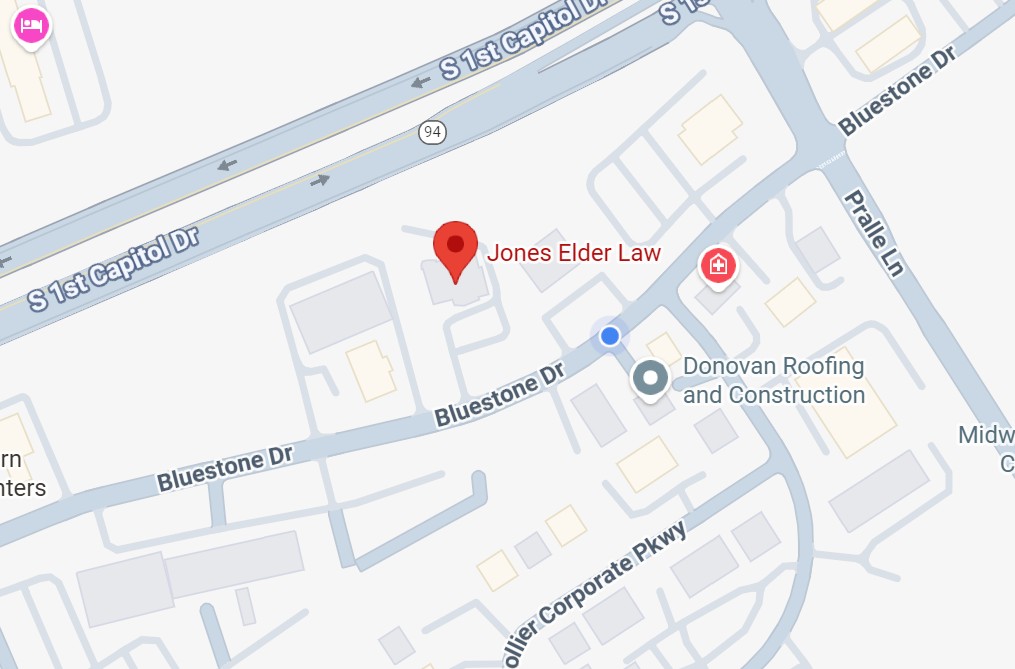
Map depicting the Jones Elder Law office
This is some text inside of a div block.

Serving Families Across St. Charles County and Surrounding Areas

Jones Elder Law provides Estate planning, Medicaid crisis planning, and asset protection services to families across St. Charles County, St. Louis County, and surrounding areas.

Our firm regularly works with families in St. Charles, St. Peters, O’Fallon, Wentzville, Cottleville, Lake St. Louis, and throughout the greater St. Louis metropolitan area.

Many Medicaid crisis matters can be handled remotely by phone or secure video consultation, allowing us to assist families quickly, even when in-person meetings are not immediately possible.

If you are unsure whether we serve your area, please contact our office and we will be happy to confirm availability.

What Happens If You Contact Jones Elder Law

1. We review your situation

We take time to understand what is happening with your loved one’s care, financial circumstances, and Medicaid concerns, so we can identify the key issues affecting your situation.

2. We explain the Missouri Medicaid rules

Missouri Medicaid eligibility involves detailed financial, medical, and timing requirements. We explain how the rules may apply to your specific circumstances and what factors could impact eligibility

3. We identify potential legal options

Based on the information you share, we discuss possible planning strategies that may be available under Missouri law and explain how different approaches could affect your outcome.

4. We guide you through the next steps

If you decide to move forward, we help you understand the process, what documentation may be needed, and what actions are typically required as your case progresses.

Protect Your Assets
Speak With a Medicaid Crisis Attorney

Missouri Medicaid rules determine how assets are reviewed during a nursing home Medicaid application. A short consultation can help clarify how your specific assets may be evaluated.

Thank you — we’ve received your information. A member of the Jones Elder Law team will review your situation and contact you promptly. If your situation is urgent, please call our office now.
Oops! Something went wrong while submitting the form.
Need to speak with someone now?
Call Our Office
If you’re on a computer, please call 636-493-3333
Missouri Medicaid Crisis Overview

This resource is provided by Jones Elder Law, LLC, a Missouri elder law firm focused on Medicaid crisis planning and asset protection.

The choice of a lawyer is an important decision and should not be based solely upon advertisements.